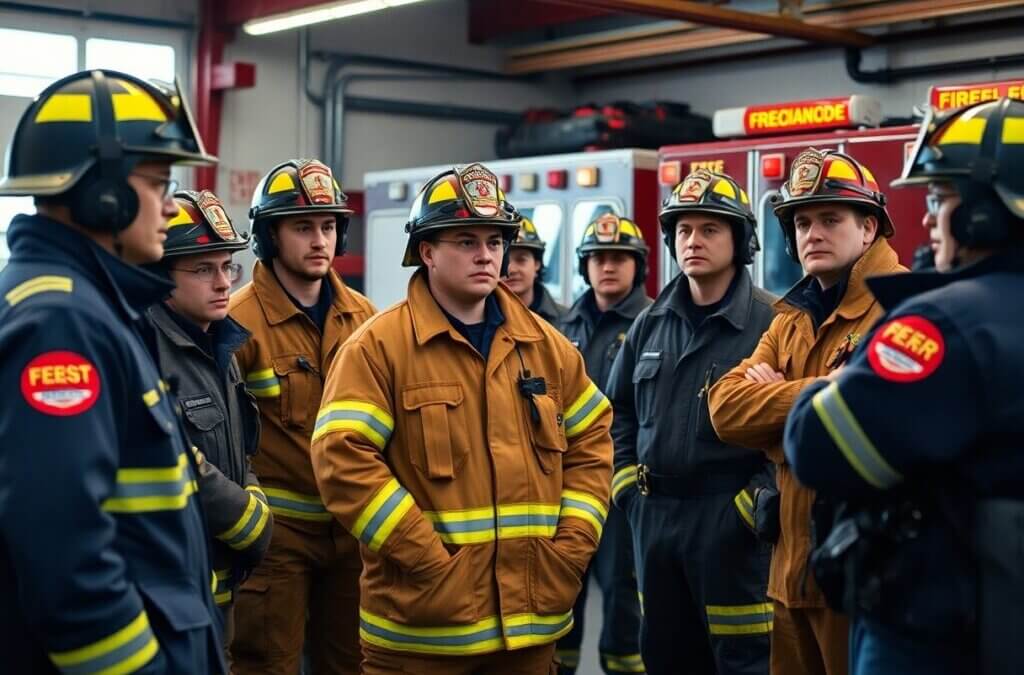
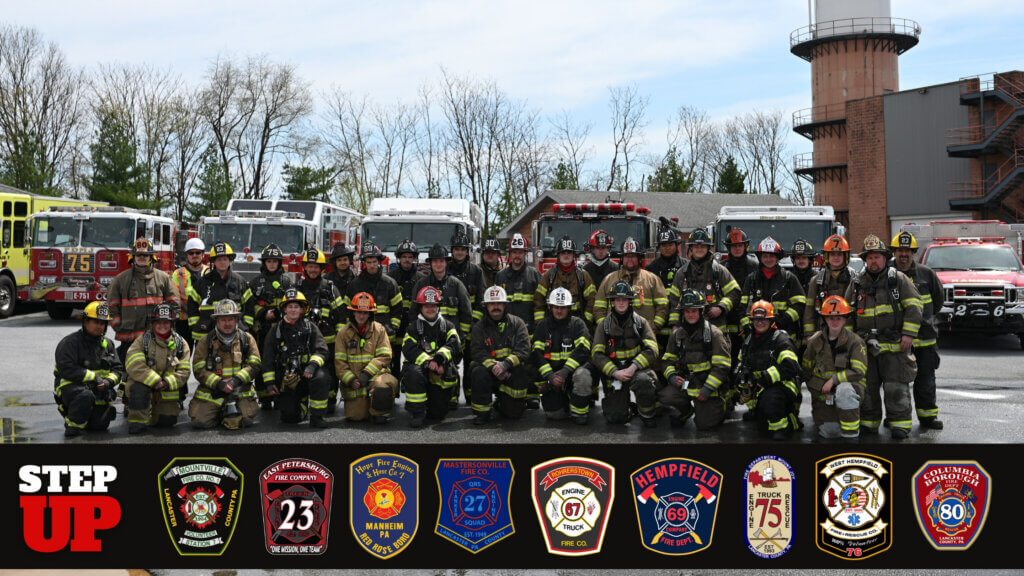
Thinking about joining the Fire Department and becoming a firefighter? Maybe you’ve watched the trucks roll out of the station, heard the siren, or talked with a firefighter who said, “You should apply.” Now you’re wondering what actually happens after you decide to pursue a career with a local fire department.
The answer is simple: be ready for anything.
Every fire department establishes its own hiring requirements and procedures, but official department recruiting information shows that becoming a firefighter can involve applications, written testing, physical ability testing, interviews, background investigations, medical evaluations, academy training, and supervised field experience. The process is designed to make sure recruits can handle the physical, mental, and professional demands of emergency response.
And no, knowing how to slide down a fire pole is generally not considered a substitute for studying.
Start by Checking Your Local Requirements
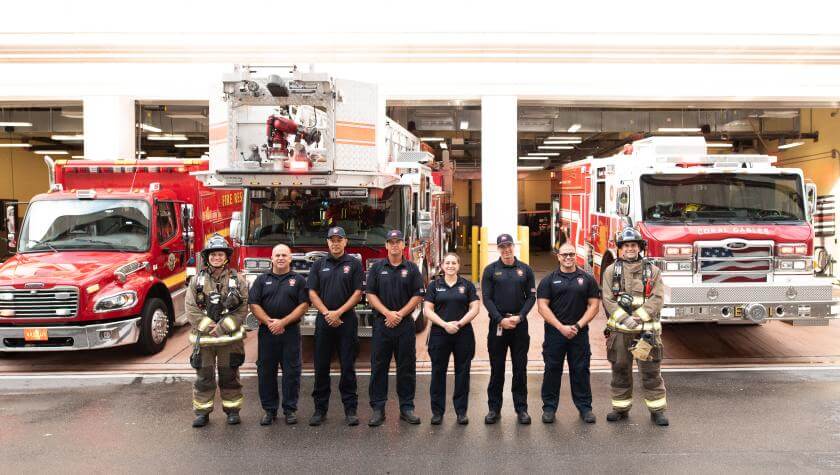
The first step toward joining the Fire Department and becoming a firefighter is finding out exactly what your local fire department requires.
Requirements vary between municipal, county, combination, volunteer, and career fire departments. Age, education, driver’s license requirements, certifications, residency, background standards, and other qualifications may differ.
That’s why applicants should always begin with the official recruiting website for the department where they want to work.
Don’t rely entirely on your cousin’s friend’s neighbor who “used to be a firefighter.”
Check the actual department.
An Application Is Only the Beginning
Once you submit your firefighter application, expect the department to evaluate much more than whether you can fill out paperwork correctly.
Many departments use several stages to identify candidates who demonstrate the judgment, fitness, professionalism, and character required for emergency service.
The hiring process can include written examinations, physical ability tests, interviews, background investigations, medical examinations, drug screening, psychological evaluations, and other department-specific requirements.
Every sequence varies.
The important thing is to read every instruction carefully.
Firefighting is a detail-oriented profession. Your application is your first opportunity to demonstrate that you can follow directions.
Get Ready for the Physical Ability Test
Here’s where things get interesting when joining the Fire Department.
A firefighter physical ability test, commonly called a CPAT or another department-specific physical test, evaluates whether applicants can perform demanding job-related tasks.
Firefighters may have to climb stairs while carrying equipment, move hoses, drag charged hose lines, carry equipment, force doors, rescue victims, and perform other physically demanding tasks.
You don’t necessarily need to become a professional bodybuilder.
But you should be physically prepared.
Start working on cardiovascular fitness, strength, endurance, mobility, and functional movement before testing day.
Trying to become firefighter-fit three days before your physical test is generally a terrible strategy.
Your lungs will file a formal complaint.
Expect the Interview
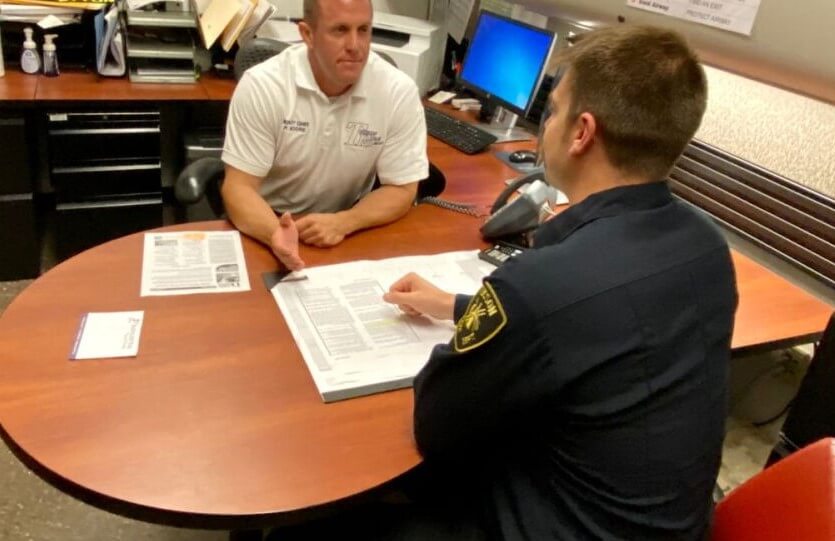
The firefighter interview is about more than saying you have always wanted to help people.
Departments want candidates who understand what they’re actually getting into.
Be prepared to discuss teamwork, responsibility, public service, accountability, communication, decision-making, and why you want to become a firefighter.
Think about real examples from your life demonstrating reliability and teamwork.
And remember: firefighters spend an enormous amount of time working with other people.
Being the world’s greatest individual isn’t nearly as useful if you can’t function as part of a crew.
The Background Investigation
A fire department background investigation can be extensive.
Departments need to know whether applicants have the honesty, maturity, judgment, and character expected from people entrusted with emergency responsibilities.
Your employment history, education, references, driving history, criminal history, and other relevant information may be reviewed depending on the department.
The best advice is simple:
If something in your background needs explanation, explain it honestly.
Trying to hide information can turn a manageable issue into a much larger one.
Medical and Psychological Evaluations
Firefighting is physically and mentally demanding.
Applicants may therefore undergo medical evaluations to determine whether they can safely perform essential job functions.
Some departments also use psychological evaluations as part of their hiring process.
This isn’t about finding people who never experience stress.
It’s about determining whether candidates are prepared for the realities of emergency service and can perform professionally under difficult circumstances.
The Fire Academy

Eventually comes the fire academy.
This is where things get serious.
Fire academy training can include fire behavior, fire suppression, rescue operations, hazardous materials, emergency medical response, equipment operation, communications, physical fitness, safety procedures, and other essential skills.
Recruits learn how to work as a team while operating in dangerous and rapidly changing environments.
You may spend hours learning something that takes seconds to perform during an emergency.
That’s intentional.
When the alarm sounds, firefighters don’t want to be thinking, “Wait, which hose is this again?”
Training creates repetition.
Repetition creates confidence.
Expect to Learn More Than Firefighting
Modern firefighters do considerably more than extinguish building fires.
Local fire departments may respond to medical emergencies, vehicle crashes, hazardous-material incidents, technical rescues, water emergencies, wildfires, public-service calls, and other emergencies.
Fire & Axes itself recognizes the broad responsibilities of today’s fire service, including urban fires, industrial disasters, hurricanes, wildfires, floods, medical emergencies, and search-and-rescue operations. (Fire and Axes)
That’s why modern firefighter training is so broad.
The fire engine is basically a very large rolling toolbox.
Learn to Work as a Crew
One of the biggest adjustments for new firefighters is learning the importance of the crew.
Fire service operations depend heavily on teamwork.
You will train, eat, clean, respond, maintain equipment, and solve problems with other firefighters.
There will probably be somebody who has been around longer who knows exactly how something should be done.
Listen to that person.
You don’t have to pretend you know everything.
In fact, firefighters generally learn pretty quickly that saying “I don’t know” is much smarter than confidently doing something dangerous.
Expect Station Life
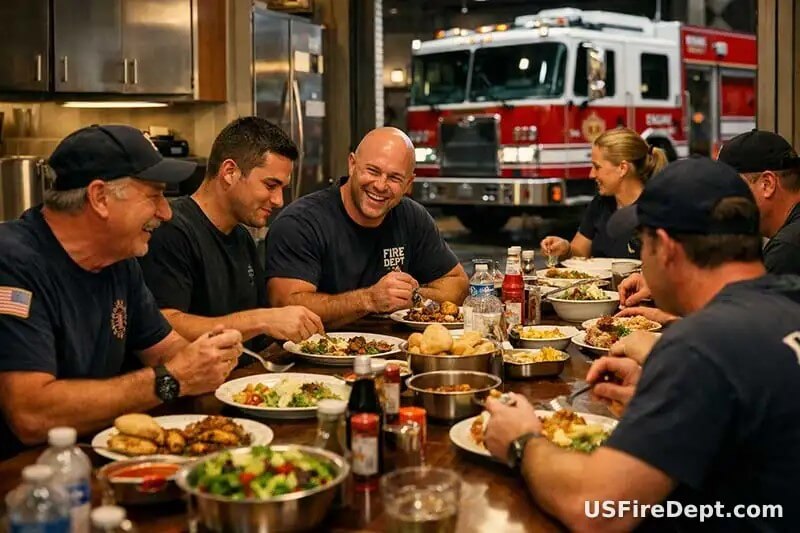
Joining a local fire department also means learning about firehouse life.
Depending on the department and assignment, firefighters may spend long shifts at the station.
That means cleaning, equipment inspections, training, cooking, maintenance, reports, physical fitness, community activities, and responding to calls.
There can be quiet periods.
Then the alarm rings.
And suddenly everyone is moving.
The coffee might still be sitting there.
Nobody cares.
The call comes first.
Field Training Continues the Education
Graduating from a fire academy doesn’t mean you’ve finished learning.
New firefighters generally continue developing their skills through supervised experience, department training, and practical emergency response.
The difference is that now you’re learning how classroom skills apply to actual calls.
You discover that every building is different.
Every emergency is different.
And the situation you thought would be straightforward may have other plans.
Build a Career
A career with a local fire department can eventually lead in many directions.
Depending on the department, firefighters may pursue specialties involving hazardous materials, technical rescue, wildland firefighting, emergency medical services, fire prevention, inspections, investigations, training, apparatus operations, or leadership.
Some firefighters eventually become engineers, lieutenants, captains, battalion chiefs, fire marshals, or fire chiefs.
Your first day as a recruit is only the beginning.
Celebrate the Fire Service

For recruits, career firefighters, volunteers, retired firefighters, firehouse families, and supporters, Fire & Axes offers products celebrating the traditions of the American fire service.
Shop Firefighter Challenge Coins — Fire & Axes offers firefighter challenge coins honoring fire departments, stations, retirements, promotions, memorials, line-of-duty service, and career milestones.
Firefighter Apparel — Explore firefighter shirts and clothing for men, women, and youth, including fire-service designs created around the traditions of the Thin Red Line.
Decals, Gifts & Accessories — Fire & Axes carries firefighter decals, drinkware, patches, gifts, apparel, coins, and other fire-service merchandise.
Create Custom Firefighter Shirts — Fire & Axes offers custom firefighter apparel and can create shirts, hoodies, coins, decals, and related products for firehouses and organizations.
Explore Custom Firefighter Products — Departments can request custom products beyond standard shirts and coins, including specialized firehouse merchandise.
Explore America’s other First-Responder Communities
The fire service is part of a larger community of American military and first responders.
Military Outfitters — Explore military apparel, challenge coins, decals, and veteran merchandise.
Vision Strike Coin — Discover military-themed challenge coins and service-inspired collectibles.
10-4 Gear — Explore police and law-enforcement challenge coins, shirts, decals, drinkware, gifts, and other products honoring America’s law-enforcement community.
Ready to Answer the Call?
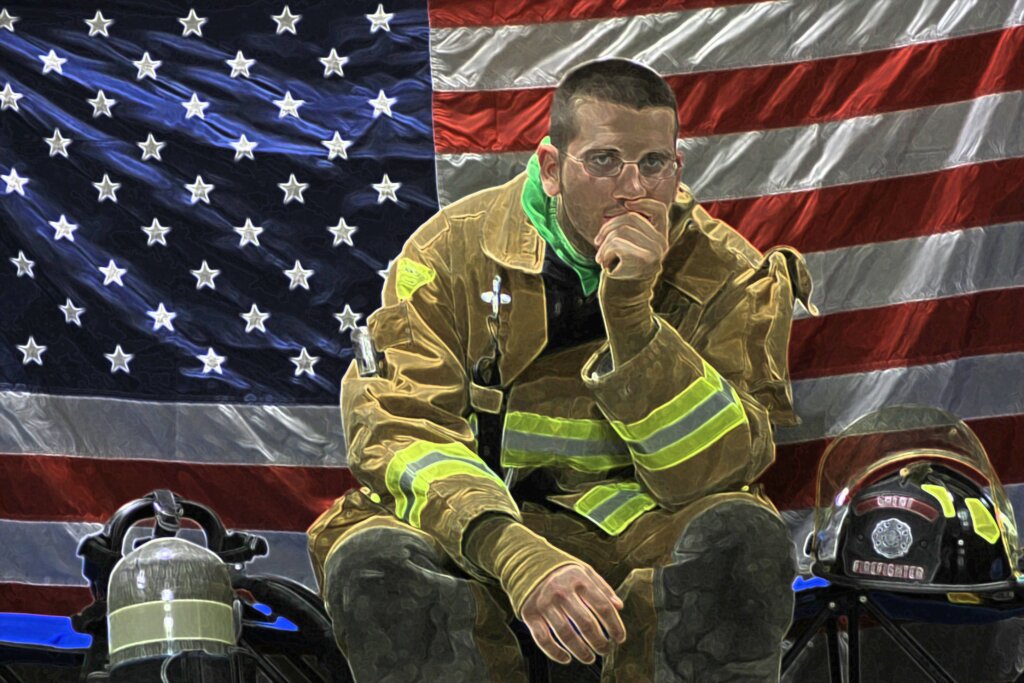
Joining a local fire department is more than getting a uniform and riding around in a shiny red truck.
It requires preparation.
Physical fitness.
Discipline.
Tteamwork.
And it requires a willingness to keep learning.
The hiring process may challenge you. The physical test may humble you. The academy may push you harder than expected. Your first emergency calls may teach you things no classroom can completely prepare you for.
But that’s also what makes the fire service special.
You become part of a team whose job is to show up when someone else is having one of the worst days of their life.
And train for the moments when seconds matter.
You learn to trust your crew.
And when the alarm sounds, you answer.
Stay ready, Safe, and when the tones drop—answer the call.